Stop Waiting for Someone to Tell You You're Enough
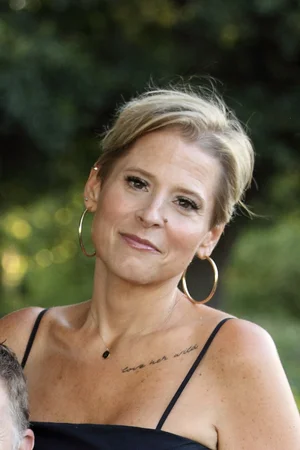
Written by Amanda Scott-Telford, Trauma-Informed Recovery and Wellness Coach, IPHM
You did something well today. Maybe you handled a hard conversation, showed up when you didn't want to, or just held it together. And the first thing you did was look around to see if anyone noticed.
That's not a character flaw. It's a pattern — one that most of us learned early and practiced for years without realizing it.
For a lot of people, the feeling of being "good enough" has always been borrowed from somewhere outside themselves. A parent's approval. A partner's warmth. A manager's praise. Over time, we outsource the job of deciding our own worth, and when that external confirmation doesn't come, something inside us quietly collapses.
Understanding why this happens — and how to change it — starts with the brain, not the mirror.
Why We Reach Outward
Reassurance-seeking isn't a weakness. Psychologically, it functions as a nervous system regulation strategy (Travers, 2026). When you ask for approval, you're often not fishing for compliments — you're trying to make yourself feel safe. The problem is that the relief is real, but it doesn't last. Research shows that external validation reduces distress in the short term but reinforces dependence over time (Travers, 2026). The need returns, often stronger.
This is what happens when self-worth becomes contingent — tied to whether someone approves, responds warmly, or notices what you did. Park and Crocker (2008) found that people who more strongly based their self-worth on others' approval experienced significantly lower state self-esteem and greater negative affect when that approval wasn't forthcoming. The more you need it, the more vulnerable you are without it.
Cognitive-behavioral therapy identifies this as a pattern of automatic thoughts and self-schemas — ingrained beliefs about what makes us worthy, often formed in childhood before we had any say in the matter (Beck, 1979). The beliefs sound like: I'm only valuable when I'm successful. I need people to like me to feel okay. If no one notices, it didn't count.
You didn't write those beliefs. They were handed to you.
What Internal Validation Actually Looks Like
Building self-worth from the inside isn't about convincing yourself you're great. It's about shifting the question you're asking.
Instead of: Am I good enough for them? Try: Am I acting in alignment with who I know myself to be?
That question changes everything. It moves the measuring stick from someone else's reaction to your own values and character — a foundation that doesn't shift every time someone has a bad day or fails to text back.
Acceptance and Commitment Therapy (ACT) supports this approach directly: people experience greater psychological flexibility and self-respect when they act according to their values, even under emotional stress (Hayes et al., 1999). When worth is measured by your own principles — honesty, care, follow-through — you stop needing someone to confirm it.
Small Practices That Actually Help
Shifting from external to internal validation isn't a single decision. It's a practice — repeated, imperfect, and worth building.
Notice what you credit yourself for. At the end of the day, name three things you did that reflected your values or that you handled — no matter how small. This isn't toxic positivity. It's self-acknowledgment, which activates the same neural caregiving systems as receiving empathy from others (Travers, 2026). Acknowledgment grounds self-worth in reality rather than praise.
Build trust through follow-through. Self-worth is built less by positive self-talk and more by lived evidence (Travers, 2026). When you keep the small commitments you make to yourself — resting when you said you would, holding a boundary, speaking up once when you'd normally stay silent — your brain accumulates data. Over time, you become someone you can count on. That's internal.
Sit with uncertainty instead of resolving it. Much of reassurance-seeking is an attempt to escape ambiguity. Research on anxiety and intolerance of uncertainty shows that excessive reassurance-seeking actually reduces your capacity to tolerate not knowing — making the dependency worse, not better (Boswell et al., 2019). Each time you resist the urge to seek reassurance and nothing terrible happens, your nervous system recalibrates.
Challenge the stories you inherited. When your inner voice says something harsh, ask: does this actually sound like anyone you know? Many of the most damaging things we say to ourselves aren't originally ours — they were absorbed from people who were afraid, limited, or in pain. Recognizing that doesn't erase the belief, but it begins to loosen its hold.
You Already Have Something to Build From
The goal isn't to stop wanting acknowledgment from people you love. Connection is human. The goal is to make that acknowledgment a supplement — something you enjoy — rather than the structural beam holding you up.
That shift doesn't happen all at once. It happens in small, repeated moments of choosing to trust yourself first. To ask what you think before you check what everyone else thinks. To know who you are without needing someone else's signature on it.
You're not broken because you've been looking outward. You just haven't had much practice looking in.
That changes now.
Download the Self-Validation Worksheet to explore how to begin to rely on internal validation instead of external validation.
Citations
Beck, A. T. (1979). Cognitive therapy and the emotional disorders. Penguin.
Boswell, J. F., Thompson-Hollands, J., Farchione, T. J., & Barlow, D. H. (2019). Intolerance of uncertainty and its role in the treatment of anxiety disorders. Cognitive Behaviour Therapy, 43(3), 187–201.
Hayes, S. C., Strosahl, K. D., & Wilson, K. G. (1999). Acceptance and commitment therapy: An experiential approach to behavior change. Guilford Press.
Park, L. E., & Crocker, J. (2008). Contingencies of self-worth and responses to negative interpersonal feedback. Self and Identity, 7(2), 184–203. https://doi.org/10.1080/15298860701398808
Travers, M. (2026, January 25). 5 ways to build self-worth without reassurance, by a psychologist. Forbes. https://www.forbes.com/sites/traversmark/2026/01/25/5-ways-to-build-self-worth-without-reassurance-by-a-psychologist/