What Are You Staying Sober For?
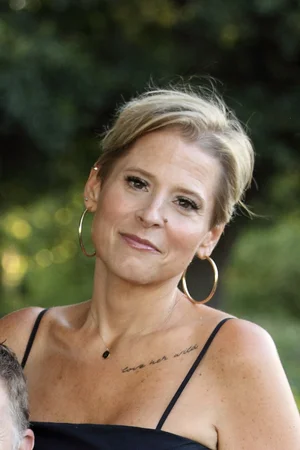
By Amanda Scott-Telford · IPHM Certified Trauma-Informed, Mental Wellness and Recovery Coach
For a long time, the whole job was to stop. Stop drinking, stop using, stop the thing that was taking everything. And stopping is enormous — it's the hardest thing many people ever do. But here's what almost no one tells you: stopping is not a destination. It's a doorway. And once you're through it, a quieter, harder question is waiting on the other side.
Not what are you staying away from — but what are you staying sober for?
A life organized around "not" is still organized around it
In early recovery, the goal is usually framed entirely as avoidance: don't drink, don't use, don't pick up. That makes sense — in the beginning, not picking up is the whole ballgame. But if months go by and your recovery is still only about the thing you're not doing, something starts to feel hollow. You white-knuckle through the days, you count them, you avoid — and yet a life organized around "not doing" a thing is still, quietly, organized around that thing. It's always in the room.
Avoidance can get you sober. It has a harder time keeping you there. Because a motivation built only on moving away from pain tends to fade the moment the pain recedes. What actually pulls a person forward, day after ordinary day, is having something to move toward.
That "toward" is a vision. And it's not a luxury for once you feel better — it's part of what helps you feel better at all.
What a vision actually is (and isn't)
Let me take the pressure off this word right away, because "vision" can sound like homework.
A vision is not a five-year plan. It's not a vision board covered in magazine cutouts. It is not a detailed, pressure-filled picture of a perfect life you now have to go achieve or else you've failed. If that's what the word brings up, set that version down.
A vision is simply a direction — a felt sense of what you're building and why. It's the answer to "what am I staying sober for," held loosely enough to change as you do. Some people find it in a relationship they want to be present for. Some in work that means something, a body that feels like theirs again, a version of themselves their kid could count on. It doesn't have to be grand. It just has to be yours, and it has to pull.
Why the "why" matters more than the willpower
There's real substance behind this, not just nice words.
Researchers who study long-term recovery have started shifting the language from relapse prevention — a purely defensive, avoid-the-bad framing — toward recovery protection: actively building a meaningful life that makes recovery worth protecting. And study after study points to the same quiet finding: a sense of meaning and purpose is one of the more powerful protective factors in staying well. People who can name what their sobriety is for tend to weather the hard days better than people running only on the fear of going back.
It makes sense when you think about it through the nervous system, too. Willpower is a top-down resource, and it runs out — especially on the days you're tired, triggered, or raw. A "why" that's bigger than any single craving works differently. When you know what you're building, and who you're building it for, a hard moment has something to hold onto. The craving says now; the vision says but this is what I actually want. That's not more willpower. That's direction.
If you can't picture anything yet
Here's the part I most want you to hear, because this is where a lot of people quietly decide they're doing it wrong: if you try to imagine a future and come up blank, that is completely normal. It's not a bad sign. It's a predictable one.
For years, your system was organized around surviving — getting through the next hour, not dreaming about the next chapter. Survival is narrow on purpose; it doesn't waste energy imagining futures. So when the emergency finally lifts and someone asks "what do you want your life to look like?", the honest answer is often I have no idea. That's not emptiness. That's an imagination that's been offline for a while and is slow to boot back up.
You don't fix that by trying harder to picture the whole thing at once. You fix it in pencil, not ink — one small sketch at a time.
A gentle way to start
You don't need the finished picture. You need a first draft. A few ways in:
Picture one ordinary good day, one year from now. Not a highlight reel — a regular Tuesday. Where do you wake up? What does your body feel like? Who do you talk to? What's one small thing you do that today's you would be proud of? Ordinary is the point; a life is mostly ordinary days.
Name your "big why." Finish this sentence honestly: I want to stay sober so that ______. Whatever comes up — even something small or unglamorous — that's the engine. Write it where you'll see it.
Follow your values, not your shoulds. The life that will actually hold you is built on what genuinely matters to you, not the vision you think you're supposed to want. If you don't know your values yet, that's its own worthwhile starting place.
Borrow, at first, if you have to. If you can't picture your own version, notice the lives around you that stir something — a flicker of I'd want some of that. Borrowed images are a fine place to begin. They get more yours the longer you live toward them.
You're not just quitting — you're building
There's a real difference between being clean and being in recovery. One is the absence of a substance. The other is the active, ongoing work of building a life that no longer requires one — a life you don't need to escape from.
So if you're past the first white-knuckle stretch and wondering why sobriety alone doesn't feel like enough, it's because it was never meant to be the whole thing. It's the ground. What you build on it is the point. You get to decide, slowly and in pencil, what you're staying sober for — and then let that pull you forward on the days willpower can't.
You're not just staying away from something anymore. You're building something. That's the whole invitation.
You're not broken. You're becoming whole.
Start your first sketch. My free My Recovery Vision worksheet walks you through picturing that ordinary good day and naming your "big why," one gentle prompt at a time. (Want to go deeper into building the life underneath it? That's the heart of my Rebuilding Life After Sobriety course.)
Want a person in your corner? Figuring out what you're building is easier with company. I offer secular, trauma-informed recovery coaching and a free 15-minute intro call — no labels, no pressure. Book a free call whenever you're ready, or see how coaching works first.
Understand the why. Heal the wound. Emerge whole.
You're not broken. You're becoming whole.
Sources
- The shift from "relapse prevention" toward actively building a meaningful life: [From Relapse Prevention to Recovery Protection: A Positive Perspective on Recovery (Journal of Substance Use)](https://www.tandfonline.com/doi/full/10.1080/14659891.2024.2395514).
- Meaning and purpose as protective factors in recovery: [Meaning in Life in the Prevention and Treatment of Substance Use Disorders (Springer)](https://link.springer.com/chapter/10.1007/978-3-319-41397-6_10) and [Exploring the Meaning of Recovery and a Sober Life After Long-Term Substance Use (SAGE)](https://journals.sagepub.com/doi/10.1177/14550725231170454).
- Why moving toward something beats moving away (approach vs. avoidance goals and well-being): [Elliot, Sheldon & Church, Approach Versus Avoidance Goals: Differences in Self-Evaluation and Well-Being](https://www.researchgate.net/publication/247746110_Approach_Versus_Avoidance_Goals_Differences_in_Self-Evaluation_and_Well-Being), with more recent support in [Achievement Motivation and Subjective Well-Being (Nature Scientific Reports, 2024)](https://www.nature.com/articles/s41598-024-73193-2).