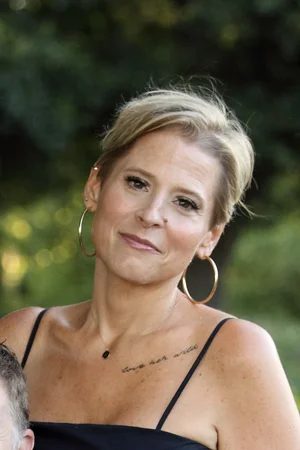
By Amanda Scott-Telford
For the People Who Love Them · Part 1 of 4
You’ve probably said it out loud or at least thought it at 2 am. Why don’t they just stop? You’ve seen someone you love give up things you care about, say that’s the last time and do it again. Somewhere inside you wonder if they loved you enough maybe they’d stop.
I want to take that question apart. Because the answer to that question changes how you hold everything.
The underlying question
When we watch someone we love keep reaching for a substance or behavior that’s obviously damaging to them, we make it about us. They’re choosing the drink over me. They’re choosing the gambling over our future. It feels like a verdict on whether we matter or not.
And it makes total sense that we react that way. It’s also often a misreading. It really does damage you. But it was never really about you.
What’s actually going on in the brain
Addiction changes the wiring of motivation. Our brains have a reward system that is designed to highlight the things that keep us alive – like food and connection and safety – with the release of dopamine. This is a thing worth doing again. A substance or a compulsive behavior comes into that system and just floods it way beyond what’s normal in life (Volkow, Koob, & McLellan, 2016). And our brain adapts the only way it can. It starts lowering our own dopamine so your person needs the thing just to feel normal. And everything else, including you, starts to look grey.
And this is where the “just have some willpower” breaks down. The circuits that would normally be sounding the alarm and telling you this is too much are being worn down (Koob & Volkow, 2016). It’s almost like asking someone in the middle of a panic attack to just relax when you ask someone in the thick of addiction to just decide to stop. The part of the brain you’re trying to reach isn’t fully at the table.
This isn’t about how much they love you. This is a survival circuit that’s been hijacked. It’s behaving exactly like a hijacked survival circuit does.
Why did they start in the first place?
For a lot of people, the substance or behavior came along as a solution long before it became a problem. It was numbing something. It was quieting down a nervous system that didn’t quite learn how to settle. Often, a nervous system that’s been shaped by old pain (Felitti et al., 1998). It doesn’t make the harm okay. But it does mean it’s usually more about an unmet need than about you not being enough.
Once you can see that, the story in your head starts to change. The old script of “how can they do this to me” starts to lose some of its grip. And you start to wonder about a different question: what is it they’re dealing with and what part of it is mine to hold?
What understanding does and doesn’t do
I want to be clear about the limits here. Understanding the why isn’t the same as excusing the harm. Or handing over your boundaries. You can have real compassion for what’s going on in someone’s brain. And still be protective of your bank account. Your sleep. Your safety. You can have both at the same time.
What you get with the understanding is footing. When you stop seeing the behavior as a scorecard on your value, you can start responding from a more solid place. You stop having a debate with a brain that can’t hear the debate yet. And you start making choices about what’s in front of you.
Their struggle to stop was never about you falling short. It’s the clearest picture you have of how much they’re carrying.
Where you go from here
That shift from blame to understanding is what the rest of this series is about. Next, we’ll talk about what to actually say to someone you love who is struggling. Including the well-intentioned ways we can make things worse.
If you’re looking for a starting point today, the free workbook below starts with a quick reflection for loved ones to help you shift from “why won’t they” to “here’s what’s mine to do.”
References
Felitti, V. J., Anda, R. F., Nordenberg, D., Williamson, D. F., Spitz, A. M., Edwards, V., Koss, M. P., & Marks, J. S. (1998). Relationship of childhood abuse and household dysfunction to many of the leading causes of death in adults: The Adverse Childhood Experiences (ACE) Study. American Journal of Preventive Medicine, 14(4), 245–258.
Koob, G. F., & Volkow, N. D. (2016). Neurobiology of addiction: A neurocircuitry analysis. The Lancet Psychiatry, 3(8), 760–773.
Volkow, N. D., Koob, G. F., & McLellan, A. T. (2016). Neurobiologic advances from the brain disease model of addiction. New England Journal of Medicine, 374(4), 363–371.