It Didn't Start With You
How childhood experiences shape us—and where to go from here
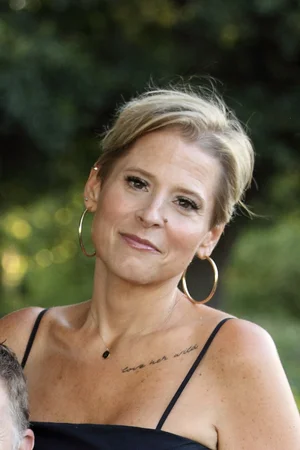
Written by Amanda Scott-Telford, Trauma-Informed Recovery and Wellness Coach, IPHM
There's a story people like to tell themselves about people who struggle with substances or maladaptive behaviors. It goes something like this: They made bad choices. They're weak. They should have known better.
But here's what that story leaves out: it didn't start with you.
Your struggle didn't emerge in a vacuum. It developed in a context—a family system, a set of circumstances, often a legacy of pain that predates your first memory.
The Science of “Why Me?"
Research on Adverse Childhood Experiences (ACEs) has shown us something remarkable: childhood trauma dramatically increases the likelihood of developing problematic relationships with substances and behaviors later in life. A landmark study by Felitti et al. (1998) found that people with four or more ACEs were seven times more likely to struggle with alcohol and ten times more likely to use injection drugs than those with no ACEs.
This isn't about excuses. It's about understanding.
When we grow up in environments marked by neglect, abuse, chaos, or emotional unavailability, our developing brains adapt to survive. We learn to seek comfort wherever we can find it. We develop coping mechanisms that work—until they don't.
The Inheritance You Didn't Ask For
Trauma doesn't just affect individuals; it echoes through generations. Epigenetic research suggests that trauma can actually change gene expression, potentially passing stress responses to children and grandchildren (Yehuda & Lehrner, 2018).
Maybe your parent drank to manage anxiety they inherited from their parent. Maybe your grandmother's unprocessed grief became your mother's depression, which became your need to numb. The pain you're carrying may not have originated with you.
This is both heavy and liberating.
Heavy because it means we're part of a larger story of suffering. Liberating because understanding the origin of our patterns is the first step toward changing them.
Breaking the Chain
Here's what I want you to know: You can be the one who breaks the cycle.
Understanding that your struggle has roots doesn't mean you're destined to stay stuck. It means you can approach your recovery with compassion instead of shame. You can stop asking "What's wrong with me?" and start asking "What happened to me—and to those who came before me?"
Recovery isn't just about putting down your drug or destruction of choice. It's about healing wounds you didn't inflict on yourself and choosing not to pass them on.
You're not weak. You're not broken. You're someone who developed survival strategies in response to circumstances beyond your control. And now? Now you get to choose differently.
That's not making excuses. That's making sense.
Emerging Whole exists for the people doing the hard work of building lives they don't need to escape from. You're not alone in this. Join our community on Instagram.
References
Felitti, V. J., Anda, R. F., Nordenberg, D., Williamson, D. F., Spitz, A. M., Edwards, V., Koss, M. P., & Marks, J. S. (1998). Relationship of childhood abuse and household dysfunction to many of the leading causes of death in adults. American Journal of Preventive Medicine, 14(4), 245-258.
Yehuda, R., & Lehrner, A. (2018). Intergenerational transmission of trauma effects: Putative role of epigenetic mechanisms. World Psychiatry, 17(3), 243-257.