You Can't Love Someone Into Recovery — But You're Not Powerless Either
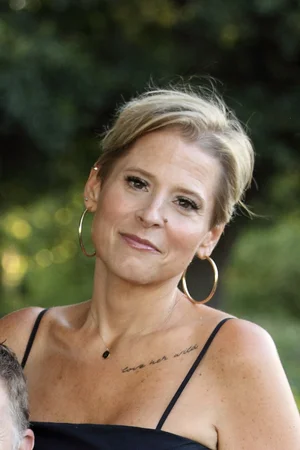
Written by Amanda Scott-Telford, Trauma-Informed Recovery and Wellness Coach, IPHM
You've read the texts at 2 a.m. You've covered for them, or refused to, and felt sick either way. You've rehearsed the speech that's finally going to get through to them — only to be disappointed again.
If you love someone who's struggling with addiction or a behavior they can't seem to stop, you already know the particular exhaustion of it. The hope and the dread riding in on the same phone call. The way your own life narrows until most of it is spent managing theirs.
I want to say something to you first, before any advice: this is one of the hardest things a person can go through, and you're allowed to be tired. You don't have to earn the right to take care of yourself by suffering a little more first.
Now let's talk about what actually helps — and what only feels like it does.
The hardest thing to accept
There's a piece of family-recovery wisdom that's been around for decades, and it holds up: you didn't cause it, you can't control it, and you can't cure it.
Read that slowly, because every part of it is a relief if you let it be.
You didn't cause it. Addiction grows out of a tangle of genetics, trauma, brain chemistry, and circumstance — not your parenting, your love, or the one fight you still replay. You can't control it. No amount of monitoring, pleading, or perfect timing reaches into someone's nervous system and changes what it's doing. And you can't cure it. The work of recovery is theirs to do, the way it would be if it were yours.
I learned this in the most direct way I can imagine. When I was in rehab, I had a video call with my husband and my recovery therapist. She asked if he had any questions, and he asked the one so many people who love someone struggling are quietly carrying: "How do I stop Amanda from drinking?"
Her answer has stayed with me ever since. "You don't. If she's going to drink, she's going to drink — and it's not your job to stop her. It's hers."
It can sound cold at first. It isn't. What she was telling him was that my recovery was mine — my responsibility, my work, mine to succeed at or struggle through. No one else could force it, fail at it, or take credit for it. You can be there for a person struggling with addiction in whatever way you choose. What you can't do is police them into wellness.
This isn't permission to give up. It's permission to stop carrying something that was never yours to lift. What's left after you set it down is the part you can affect — and that part is bigger than people tend to think.
Help versus enabling — the line that actually matters
"Stop enabling" is advice everyone hands out and almost no one explains. So here's a cleaner way to think about it.
Helping supports the person. Enabling protects the addiction from its own consequences.
Paying the phone bill so they can stay connected to a support group is help. Paying it again after they spent rent money on the thing is probably not. Driving them to treatment is help. Calling their boss with a fake excuse is the addiction talking through you.
The honest test is uncomfortable: does this make the next use easier or harder? Not whether it makes today calmer — almost everything makes today calmer in the moment. Whether it makes the pattern easier to keep.
One caveat, because it matters: this is about consequences, not safety. Keeping someone alive is never enabling. If there's risk of overdose, get naloxone (Narcan) and learn to use it. Harm reduction isn't giving up on them — it's making sure they're still here for the recovery you're hoping for.
Boundaries are for you, not against them
When people hear "boundaries," they often hear "punishment." They're close to opposite.
A boundary isn't a threat you hold over someone to change their behavior. It's a line you draw to protect your own — what you will and won't be part of, regardless of what they choose. "I love you, and I won't give you money" is a boundary. "I love you, and I'm not able to talk when you've been using" is a boundary. You're not controlling them. You're deciding how you'll show up.
The hard part is that boundaries only mean something if you keep them when they're tested — and they will be tested. If you're not sure where yours even are right now, my Boundary Setting worksheet is built to help you figure out what to ask for, what you don't owe, and who gets a front-row seat to your life.
You are also a person in this story
Somewhere in the middle of loving a person who struggles with addiction, a lot of people quietly disappear. Your sleep goes. Your friendships thin out. Your own feelings start to seem like a luxury you can't afford while someone else is in crisis.
This has a name — it's a form of chronic, secondary trauma, and it does real things to your body and mind. You can't pour steadiness into someone else from an empty tank, and you don't have to wait for them to get better before your life is allowed to count again.
So check in with yourself the way you keep checking in with them. The Whole Life Wheel can show you which parts of your own life have gone quietly neglected. The Sitting With Feelings worksheet can help you process what you've been too busy to feel. Your wellbeing is not a distraction from the problem. It's part of the solution.
What the evidence says actually works
Here's the genuinely hopeful part, and most families never hear it: there's a researched, secular approach to all of this, and it works better than the stuff we usually default to.
It's called CRAFT — Community Reinforcement and Family Training. Instead of confrontation, ultimatums, or detaching and waiting for rock bottom, CRAFT teaches families to use connection, communication, and positive reinforcement to gently move a loved one toward help.
And the numbers behind it are hard to ignore. In a controlled study of families of problem drinkers, CRAFT got 64% of resistant loved ones into treatment — compared with just 23% for the confrontational Johnson Intervention and 13% for an Al-Anon–based approach. A separate trial with families of people using drugs found that same 64% engagement, against 17% for a twelve-step support group. Put plainly, warmth and skill get a struggling person through the door at roughly three to five times the rate that confrontation or waiting-it-out manages — and CRAFT improves the family member's own wellbeing along the way. The American Psychological Association has a clear summary of those early trials if you want to read it yourself.
And this isn't just old research that sounded good once. A 2010 meta-analysis pooling multiple studies found CRAFT about twice as effective as other approaches at getting a reluctant person into treatment, and a 2020 systematic review found that the most complete versions — the ones combining individual and group support — pushed treatment-entry rates as high as 77 to 86%. The evidence has held up.
The short version of what it points to: warmth opens doors that pressure slams shut. Notice the moments they're sober and let them know you saw. Stay connected. Talk to them without contempt, even when you're furious. Take care of yourself in the meantime. None of that is as satisfying as the big confrontation we picture, but shame has never once talked a person into healing, and this does more than any speech ever will.
When stepping back is the loving thing
Sometimes, after everything, the most caring move is distance — for a while, or for good. If staying close means staying in harm's way, protecting yourself isn't abandonment. I've written more on going no contact here and here, if that's where you're landing. Love and distance aren't opposites.
Where to land
A few places built for people in exactly your position:
- CRAFT resources — the book Beyond Addiction: How to Help an Addicted Person is pretty accessible and the website is a great place to start.
- SMART Recovery Family & Friends — free, secular, science-based meetings for loved ones.
- SAMHSA's National Helpline — 1-800-662-HELP (4357), free and confidential, 24/7, for treatment and family support referrals.
- Al-Anon — widely available and helpful for many, though it's rooted in a higher-power framework; worth knowing it's one option among several, not the only door.
A last word
You can't do their recovery for them. What you can do is change the air around it. Stay connected without disappearing into their crisis. Hold the lines that keep you intact. And get your own support now, rather than waiting until you're running on empty to admit you needed it.
And if you want a hand sorting out what your role actually is in someone else's struggle, that's work I do too. Loving an addict is its own kind of journey, and you don't have to navigate it without support. Book a free Discovery Call and we'll figure out your next step together.
---
If your loved one is in immediate danger or you're worried about an overdose, don't wait — call 911. For mental health crisis support, call or text 988 in the U.S. any time.
Understand the why. Heal the wound. Emerge whole.
Citations
American Psychological Association. Community Reinforcement and Family Training (CRAFT). apa.org
Miller, W.R., Meyers, R.J., & Tonigan, J.S. (1999). Engaging the unmotivated in treatment for alcohol problems: A comparison of three strategies for intervention through family members. Journal of Consulting & Clinical Psychology, 67(5), 688–697. (CRAFT 64% vs. Johnson Intervention 23% vs. Al-Anon 13%.)
Kirby, K.C., Marlowe, D.B., Festinger, D.S., Garvey, K.A., & LaMonaca, V. (1999). Community reinforcement training for family and significant others of drug abusers. Drug and Alcohol Dependence, 56(1), 85–96. (CRAFT 64% vs. twelve-step group 17%.)
Roozen, H.G., de Waart, R., & van der Kroft, P. (2010). Community reinforcement and family training: an effective option to engage treatment-resistant substance-abusing individuals in treatment. Addiction, 105(10), 1729–1738. (Meta-analysis: CRAFT roughly twice as effective as comparison approaches.)
Archer, M., Harwood, H., Stevelink, S., Rafferty, L., & Greenberg, N. (2020). Community reinforcement and family training and rates of treatment entry: a systematic review. Addiction, 115(6), 1024–1037. (Multi-modal CRAFT reached 77–86% treatment-entry rates.)
Jeffrey Foote, Carrie Wilkens & Nicole Kosanke. Beyond Addiction: How Science and Kindness Help People Change(Scribner, 2014).
SMART Recovery. Family & Friends Program. smartrecovery.org/family
Substance Abuse and Mental Health Services Administration (SAMHSA). National Helpline. 1-800-662-HELP (4357). samhsa.gov/find-help